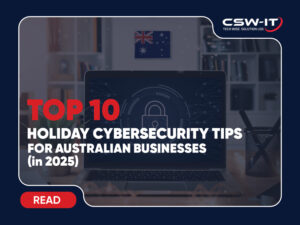

As Australian businesses wind down for Christmas, cybercriminals ramp up. The holiday period is now one of the highest-risk windows for cybersecurity incidents, with the ACSC reporting increased phishing, ransomware activity, and payment fraud attempts each December. Reduced staff, remote work, skeleton IT coverage, and end-of-year fatigue all contribute to weaker defences — particularly for small and medium businesses.
To help protect your organisation through the festive season, here are the Top 10 Holiday Cybersecurity Tips for Australian Businesses in 2025 — a practical guide tailored by the team at CSW-IT.
1. Lock Down Remote Access Before Teams Go on Leave
With employees working remotely or travelling, unsecured access points become prime targets. Ensure VPN credentials are up to date, MFA is enforced, admin accounts are reviewed, and old or unused access is disabled. Any remote desktop connections left open over Christmas are a major entry point for attackers.
2. Strengthen MFA and Password Policies Across All Systems
Credential theft spikes during the holiday season. Enforce MFA on Microsoft 365, cloud apps, CRMs, project systems, and payroll platforms. Ensure staff update weak passwords and run a credential audit for any shared or generic accounts — especially common in construction, trades, and healthcare settings.
3. Run an End-of-Year Patch & Firmware Update Cycle
December is the ideal time for a full patch cycle. Update servers and endpoints, network switches and wireless controllers, firewalls and security appliances, and industry-specific software such as practice management, job management, POS, or ERP systems. Many ransomware attacks in Australia still exploit unpatched vulnerabilities.
4. Prepare Your Incident Response Contacts and Escalation Paths
Most businesses rely on skeleton crews over the break. Ensure your team knows exactly who to call if something goes wrong — both internally and externally. Document the process, pin it in Teams or Slack, and ensure emergency contacts are monitored.
5. Warn Staff About Holiday-Themed Phishing Scams
Threat actors rely on seasonal social engineering: fake delivery notices, gift card scams, charity impersonations, supplier invoice changes, and end-of-year payroll updates. Run a short refresher with your team or circulate a quick-guide checklist before Christmas.
6. Secure Business Email and Invoicing Systems
Business Email Compromise (BEC) remains the highest-cost cybercrime in Australia. Finance teams should be extra vigilant during the holiday rush. Put controls in place for payment redirects, supplier banking detail changes, fake invoice attachments, and urgent transfer requests from impersonated executives. Require phone verification for any change to payment details.
7. Review Admin Privileges and Deactivate Old Users
End-of-year clean-ups prevent many breaches. Audit all accounts across your Microsoft environment, cloud apps, and third-party tools. Remove old contractors, interns, temp staff, and duplicate accounts. Excess permissions increase the impact of any breach.
8. Back Up Everything — and Test the Restore
A backup is only useful if you can restore it. Before Christmas, verify on-prem backups, cloud backup policies, immutable storage retention, and that restore tests work end-to-end. Industries like construction and healthcare rely heavily on operational data; losing access over the break can halt projects and patient operations.
9. Monitor Your Network 24/7 (Even While You’re at the Beach)
Holiday periods create blind spots. If you do not have SOC or centralised monitoring, consider enabling enhanced alerting across Microsoft 365, endpoint protection, and your network. Automated threat detection dramatically reduces response time while staff are offline.
10. Prepare for the Cyber Security (Ransomware Payment Reporting) Rules 2025
From 2025 onward, Australian businesses must report ransomware payments within 72 hours. Use December to review what constitutes a reportable incident, who is responsible for notifications, and whether your business has a documented ransomware response plan. This regulatory shift affects all sectors and reinforces the need for better visibility and preparedness.
Final Thoughts
Cyberattacks don’t take holidays — in fact, the Christmas period is one of the riskiest times of the year for Australian SMBs. By taking proactive steps now, your business can stay resilient, compliant, and protected well into 2026.
If you’d like help preparing your organisation for the holiday season, ensuring your systems are secure, or reviewing your current cybersecurity posture, our team is here to help.
Book a FREE IT Assessment today and start the new year with confidence.